Prototyping in sheet metal fabrication: from design to production
In the development of a sheet metal component, the phase preceding industrial production is crucial for verifying the feasibility of the design and mitigating risks, thereby ensuring precision, reliability, and production continuity.
Before manufacturing production dies, some customers may request rapid prototyping of the component, as this allows them to quickly obtain a sample for technical verification, assembly testing, and design validation.
At Minifaber, rapid prototyping is a key phase of the development process, and thanks to in-house cutting, bending, and welding technologies, the company can produce prototypes and small batches quickly, allowing the customer to test the component before investing in the construction of the final dies.
What is rapid prototyping in sheet metal fabrication
Rapid prototyping, an important service for the customer, consists of the production of prototypes or small series of sheet metal components, which takes place before the start of industrial production and serves to:
- verify correct assembly within more complex assemblies
- test the component’s behavior in the machine or final device
- evaluate any design modifications
- confirm the choice of production technologies
This is, therefore, a technical validation phase, which allows for the identification of any critical issues even before the construction of the final dies, thus avoiding the need for costly modifications in subsequent phases.
This is an important approach, especially in the production of metal components intended for complex systems, where it is essential that both dimensional accuracy and compatibility with other parts be verified in advance.
Through rapid prototyping, therefore, it is possible to test the component’s functionality in the final product and gather additional information useful for designing the final mold. This explains why the prototype is an essential part of the project, as it validates it before mass production.
After confirming the component’s functionality, in fact, we move on to the next step: the design and construction of production molds.
What technologies are used for rapid prototyping?
Tocreate prototypes quickly, Minifaber uses production processes that are more flexible than industrial molding.
Among the main technologies employed are:
Pilot dies
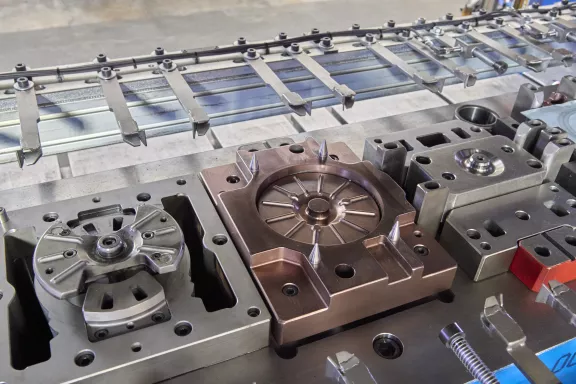
Pilot dies can be produced; these are simpler and more economical than final dies, allowing for the production of the first samples while also gathering useful information for the subsequent design of production dies. During this phase, aspects such as material behavior, potential deformations, and possible process issues can be studied.
Laser cutting and/or punching
Whenever possible, prototypes are produced via laser cutting or punching of sheet metal parts, avoiding the immediate creation of dedicated blanking dies.
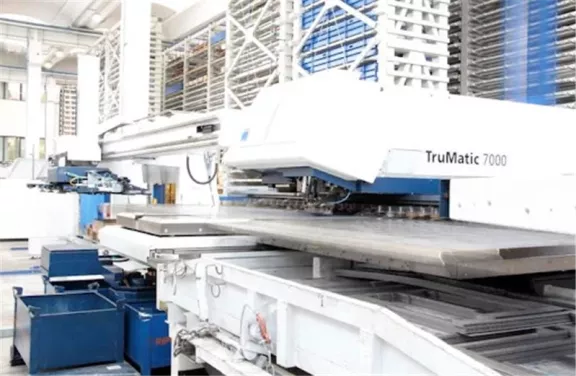
This step is possible because Minifaber has 2D and 3D laser cutting machines and combined laser cutting/punching machines at its disposal.
By utilizing these technologies, it is possible to rapidly produce sheet metal components with high precision.
Bending with press brakes
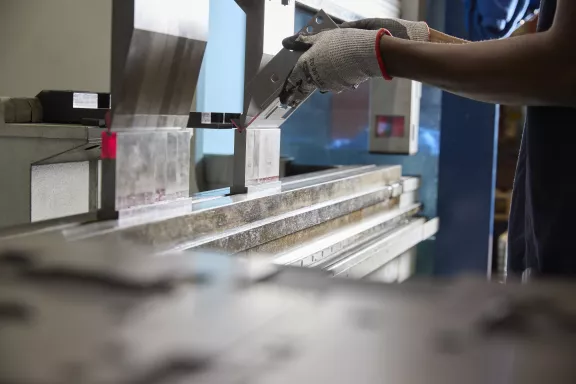
Bending operations can be performed using press brakes with standardized tools, avoiding the construction of dedicated bending dies.
Minifaber is equipped with 7 press brakes, which allow for the production of prototypes and small series with very short setup times.
Welded components
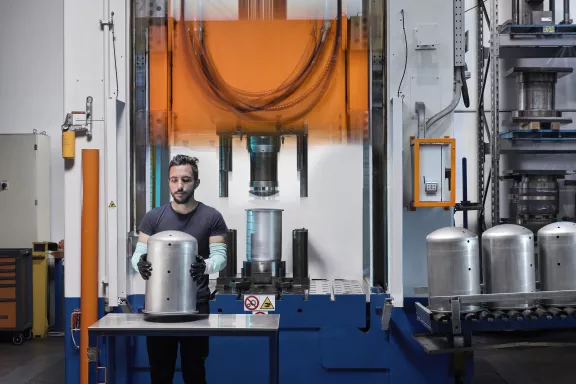
In some situations, to speed up the production of samples, we may resort to welded assemblies instead of producing complex deep-drawn components that would require multiple steps and multiple dies.
This approach allows us to quickly obtain functional parts for assembly and validation testing.
The Minifaber welding department offers various processes, including:
- MIG/MAG welding
- TIG welding
- laser welding
- capacitor discharge welding
- resistance spot welding
Prototypes can also undergo surface finishing to simulate the conditions of the final product as closely as possible.
Available processes include:
- mechanical finishing
- polishing
- galvanizing
- painting
The customer can thus test the component under conditions very similar to those of industrial production.
From prototype to industrial production: the transition
Once the sampling phase is complete and the design has been validated, we proceed with the creation of the final molding tools.
The information gathered during prototyping allows us to design more efficient and reliable molds, reducing development times and potential modifications during the production phase.
The transition from prototyping to production is therefore a structured process through which a technical drawing of an industrial component comes to life and is ready for mass production.
Applications in various industrial sectors
The prototypes produced by Minifaber are used in numerous industrial sectors.
Among the main areas of application:
- Electromechanical
- Kitchen robotics
- Vending
- Medical
- Gas distribution
- Home / Professional Appliances
- Energy Distributors
- Professional Lighting
In all these contexts, the ability to quickly obtain functional samples allows customers to accelerate the development of their products.
Minifaber’s technical support in product development
Rapid prototyping is part of a process of technical collaboration between Minifaber and the customer.
The company supports component development through a preliminary analysis of the technical drawing, including a feasibility assessment. Furthermore, it assists the customer in selecting production technologies and provides rapid prototyping, followed by the development of production equipment
This approach allows us to guide the customer from design to industrial production, reducing development times and improving the reliability of the final product.